We offer confidential emotional support for children and young people.

How CHATS can support you
The Children’s Healing and Therapeutic Support (CHATS) Team at Birmingham Hospice provide confidential emotional support for children and young people when a loved one is poorly or if they have died.
Our Children’s Therapeutic Practitioners Samantha Kelly, Karen Ward, Mo Sasaru and Helen Lees form the CHATS Team.
What support is available?
We offer one-to-one sessions with children and young people to help them explore and express their feelings. We have a designated rooms at both hospice sites for the sessions and, if appropriate, we can also offer home and school visits.
All sessions are tailored to each child based on their individual needs and circumstances. We use a range of art and creative materials to help the child feel relaxed and express their emotions healthily.
We also run support groups for children and young people who have loved ones receiving care from the charity. This provides an opportunity for them to talk and share with other children who are in similar situations, supporting each other through creative activities. Each group will have a different theme that aims to open up conversations about what helps them manage difficult feelings.
The team can support and guide you in how and when to talk to children, offering strategies to enable better communication within families. With your permission, we can speak to other adults and professionals in your child’s life either over the phone or face-to-face.
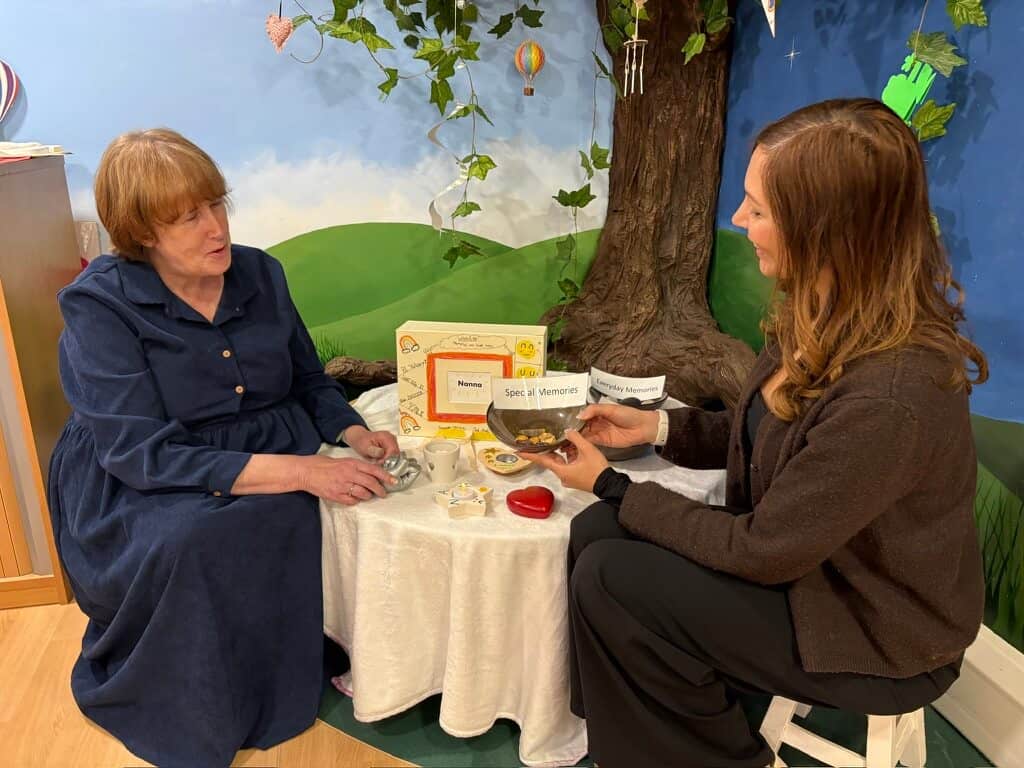
As well as offering advice and support, CHATS also aim to upskill and support professionals, such as school staff, through offering specialised and tailored training packages to further ensure your child is well supported during this difficult time.
The CHATS Team can also help you access support from other teams in the charity if you are struggling.
CHATS specialises in both pre- and post-bereavement support which means we only work with issues related to this. If your child has additional support needs, we will happily signpost and try to refer them to the relevant agency that may be able to provide appropriate support.
Get in touch with the CHATS Team
If you would like to find out more about how the CHATS Team can support you, please contact them directly:
Call: 0121 269 5000
Adam got to trust Sam and felt like he could tell her anything and everything. She was marvellous with him and as the months went by I could see Adam changing. I don’t know where he would be today without her."
Susan – Grandmother of a child supported by the CHATS Team

Creatively Supporting Young People Through Grief
The ‘Creatively Supporting Young People Through Grief’ workbook is full of useful guidance, worksheets and activities which will be a useful resource for any professional supporting a young person or child through their journey. You can order the workbook from our online shop.

“The CHATS workbook has been a really valuable resource within our school setting. It provides clear, practical and age-appropriate activities that help staff support children who are experiencing grief, loss or difficult changes in their lives. The workbook is accessible, sensitive and easy to use, giving staff the confidence to open up conversations with children in a safe and supportive way. Overall, the workbook has strengthened the way we support children’s emotional wellbeing and has been a very useful tool for both early intervention and ongoing pastoral support. “
Rajan Bhatti, Deputy Headteacher, St Michaels C of E Primary School and Nursery
Frequently Asked Questions
The answers below will help you support children and young people who have lost a loved one and navigate this difficult time.
It is common to be unsure if your child should attend the funeral of a loved one, we may worry that by seeing others upset and attending the service or crematorium they may become more distressed. Having said this, it can be a positive experience for children, but it is important that they are prepared for what the funeral will entail and are given the choice about if they attend or not. It can be an important part of saying goodbye to their loved one and they may also wish to be part of the service if they choose to. The funeral can be a really helpful way for children to say goodbye, and it can be a comfort to be around others who loved the person and will miss them.
Talking about the practicalities of a funeral may feel daunting, but being able to spend time with your child preparing them and explaining what will happen will be beneficial, they then will have the information they need to help them make the decision. If your child does attend it may be useful to have a trusted adult on hand who they know they can go to if they need to leave for whatever reason.
While seeing you upset will impact your child, it is absolutely ok to show them that you are experiencing difficult emotions, in a controlled way. Seeing you and others in the family cry teaches them that it is healthy to show their feelings and that sadness is a normal emotion that we all experience. Seeing others express their emotions may encourage them to do so if they are bottling up their true feelings.
When experiencing upset try to explain why you are feeling this way to your child to ensure that they do not blame themselves or feel that they need to try to fix it. Reassure them that they are safe and you do not need them to do anything. Healthy expression of grief and sadness can encourage empathy and can also teach emotional regulation. It is helpful to allow your child to see how you recover and regulate your emotions.
Sharing the news that a loved one will soon die is difficult and understandably upsetting. As a parent/carer it is natural to want to protect your child from anything that may distress them. Very often children may already have an idea that something is changing within the family and this can be destabilising and frightening for them if they don’t have the correct information. We would encourage parents to ask their child what they may think is happening initially and then to share news with their children in an age-appropriate way, using simple language and allowing time for them to ask questions.
Breaking the news down into smaller chunks is a good idea as it is important not to overwhelm your child. If a child is not told that a loved one is dying they may then feel that they have been mislead or are not important within the family. Once a child knows they may have questions immediately or they may take time to digest and come back to you to talk at a later time – or they may not feel they need to ask anything at all. Reassure them that whatever they are feeling is completely ok and let them know they can talk about it whenever they wish to.
Grief is not linear; children’s grief often comes in waves (we may refer to this as puddle jumping as children move swiftly in and out of their emotions) and changes as they grow and understand the loss differently at each developmental stage. Every child will grieve differently.
Our grieving journey never ends but we find ways of managing those difficult emotions as we get older and our world becomes wider.
This is an individual and personal decision, and it depends on whether it brings comfort to your child. It may be just about timing and that after a certain amount of time they may want to see them on display. We encourage parents to let the child have some control over certain decisions and this could be one of them. There is no right or wrong way, let your child lead with this.
We often get asked this question by patients/families and our answer is YES! We actively encourage children to visit their loved ones at the hospice and there are many reasons for this. Being part of the journey (no matter how sad it is) can remove so much fear from the situation and help them to process what is happening, giving them opportunities to ask questions and spent precious time with them, no matter how limited it is.
Children deserve to be part of it just as much as the adults.
We appreciate this takes a lot of bravery, but we also know this is a beneficial thing for your child. However, we are advocates for children to have a voice and choice, it should be their decision based on the facts you give them. We suggest that if they decide not to visit then maybe they can draw pictures for the patient, send voice notes or write them a letter. Whatever they decide, always remember to keep them informed of any changes.
As a parent it can be difficult to explain death and also for a child to understand death, particularly that it is permanent. They need to be able to talk about their thoughts and feelings and to ask questions. You can use the circle of life as an example and that everything that lives eventually dies. It is important that they understand that the person that has died can no longer think or feel anything and explain that the heart stops beating and they can no longer feel anything such as pain or hunger.
We would encourage you not to use terms like “gone to sleep”, “gone to a better place”, “they are watching over you” or “we lost them” as this can create fear and/or confusion. Ask your child what they think happens when someone dies as this can help you open up the conversation to explore their thinking and dispel any particular worries or fears.
Some changes you may notice that could indicate your child may need support are:
• Becoming easily agitated.
• Withdrawal such as not speaking to friends and spending more time alone.
• Regression such as bed wetting or using baby language.
• Disrupted sleep.
• Appetite changes.
• Developing anxieties or lots of worries.
• Changes in behaviour or engagement at school.
• Anything that you notice is out of your child’s normal routine or presentation.
For any therapeutic support to have a positive impact, it is important for your child to want it too. Therefore, we always encourage parents to be led by your child and wait for when they feel ready to engage with us. Giving them as much information about our service and what they can expect from us will be helpful for them to decide when it is the right time for them to have some support.
There may be some things that you will be able to do with them at home so we are always happy to keep in touch with you and provide advice and suggestions until they are happy to have sessions themselves. Equally, there may be some strategies that your child’s school could put into place and we can support you to have conversations with school staff or talk with them directly to see what package of support would be most helpful for your child when they are in school.
As soon as a loved one starts receiving support with Birmingham Hospice, our service will be available to your family and this will be an open invitation until your child is an adult.
We believe that a child’s journey with grief starts as soon as a loved one becomes unwell as they may already start to see changes in their routines and have new feelings emerge. For this reason, we feel passionate about starting conversations about change, palliative care and death as early as possible to allow your child to develop an appropriate understanding of what is happening and what plans are in place. It will also allow time for your child to do some special activities with their loved one that will form comforting memories after that person has died. Our team are happy to either facilitate such activities or suggest ones that you can do as a family in your own time.
All our services are free of charge. Your donation makes a difference.

Donate
£22
Could pay for a teddy bear with the recording of a loved one’s voice for children to treasure forever.

Donate
£59
Could pay for a bereavement support session to help families through the journey of grief.

Donate
£93
Could pay for a nurse to visit a patient in their home so they can be cared for in the place of their choice.

Donate
£174
Could pay for an Occupational Therapist to visit a patient at home, helping them be as independent as possible.